About Matree Vastu
A Vāstu education, research and professional initiative exploring how traditional knowledge can engage thoughtfully with modern architecture and contemporary life.
Matree Vastu
Through his research, teaching and professional practice, Dr. Saha has developed the Matree Vastu approach to the systematic study and application of Vāstu Śāstra.
The Matree Vastu framework explores a 9-Zone & 17-Sub Zone Energy Grid and its relationship with traditional Vāstu concepts, including:
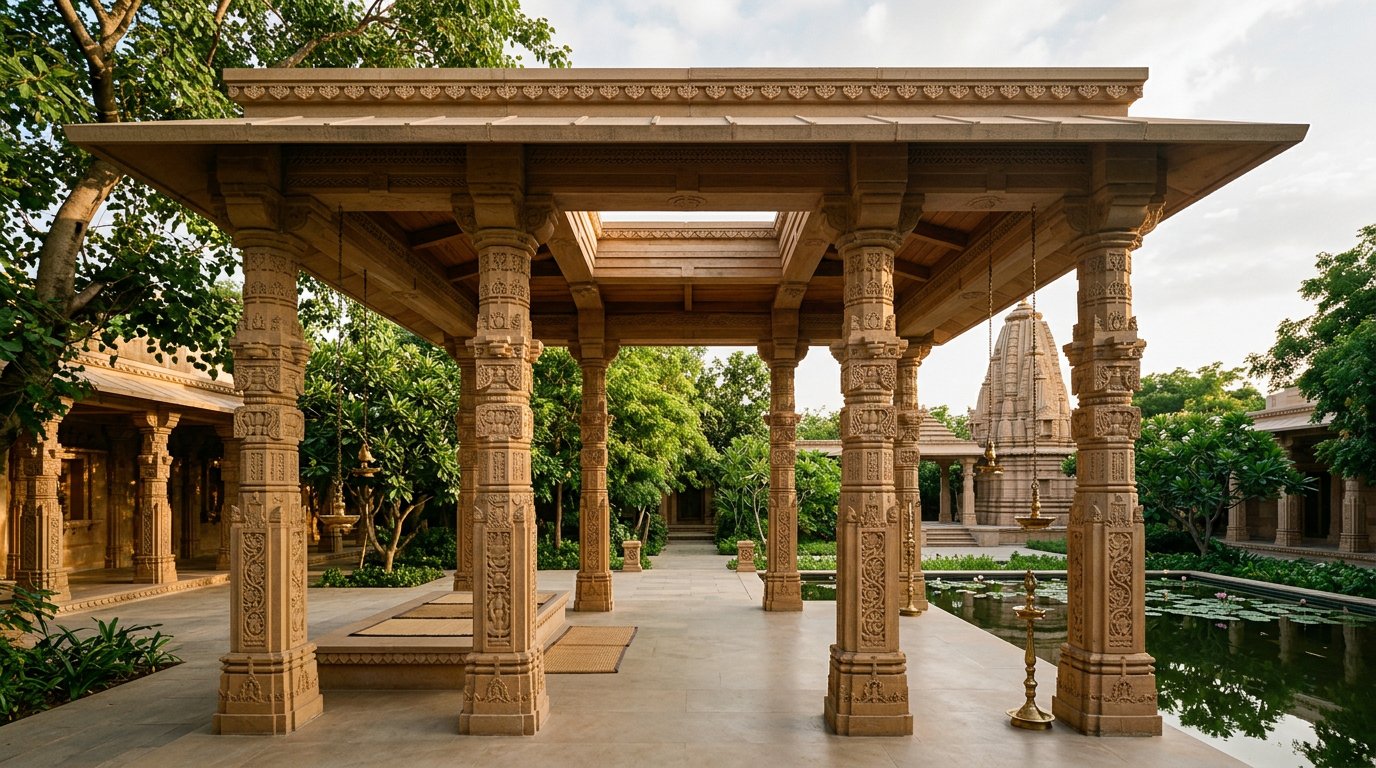
The approach seeks to connect these traditional concepts with architectural planning, functional zoning, environmental understanding and contemporary application.
ARCHITECTURE • CONSULTANCY • EDUCATION • TRAINING • RESEARCH
Dr. A. B. Saha is actively engaged in architectural practice, Vāstu consultancy, education, professional training and research, with a focus on bringing traditional Vāstu, Vedic and Āgamic knowledge into meaningful dialogue with contemporary architecture and modern life.
Vāstu, Vedic and Āgamic Services
His work encompasses the following areas:
VĀSTU CONSULTANCY
Professional Guidance for Residential, Commercial & Institutional Spaces
- Residential Vāstu Consultancy
- Commercial & Business Vāstu Consultancy
- Industrial Vāstu Consultancy
- Institutional Vāstu Consultancy
- Spiritual & Sacred Space Consultancy
- New Property & Existing Property Assessment
- Online Vāstu Consultation
- On-Site Vāstu Consultation
- Detailed Vāstu Assessment & Recommendations
VĀSTU ARCHITECTURE
Integrating Traditional Vāstu Principles with Modern Architectural Planning
- Vāstu-Based Site Evaluation
- Vāstu-Oriented Property Selection
- Site & Building Planning
- Vāstu Puruṣa Maṇḍala-Based Planning
- Vāstu-Compliant Architectural Design
- Functional & Spatial Zoning
- Interior Planning & Design
- Contemporary Vāstu Integration
- Residential, Commercial, Industrial & Institutional Architecture
- Spiritual & Sacred Architecture
VĀSTU REMEDIES & TRADITIONAL PRACTICES
Understanding, Correcting & Harmonizing Existing Spaces
For properties where architectural reconstruction is not practical, Matree Vastu explores appropriate traditional Vāstu corrections and remedies, according to the nature of the property and the identified Vāstu considerations.These may include:
- Vāstu Evaluation
- Traditional Vāstu Corrections
- Functional & Spatial Adjustments
- Traditional Vāstu Remedies
- Purification Practices
- Vāstu & Sacred Ritual Practices
- Traditional Energy-Balance Practices
EDUCATION & TRAINING
Learn • Understand • Practice • Apply
Through the Matree Vastu Training Center, Dr. Saha provides online and classroom-based education and professional training in Vāstu Śāstra and related Indian knowledge traditions.Educational areas include:
Vāstu Śāstra • Vāstu Puruṣa Maṇḍala • Pañca Mahābhūtas • Vedic Knowledge • Āgamas • Vedic Architecture • Hindu Temple Architecture • Yoga • Āyurveda • Jyotiṣa • Traditional Indian Knowledge Systems The training is intended for architects, engineers, interior designers, Vāstu practitioners, students, professionals, spiritual teachers and individuals interested in systematic study of traditional Indian knowledge.RESEARCH & KNOWLEDGE DEVELOPMENT
Explore • Document • Preserve • Develop
Research forms an important part of Dr. Saha's work.His areas of research and study include:
- Vāstu Śāstra
- Vedic & Āgamic Architecture
- Hindu Temple Architecture
- Vāstu Puruṣa Maṇḍala
- Pañca Mahābhūtas
- Traditional Spatial & Environmental Knowledge
- Indian Aboriginal Knowledge Traditions
- Vedic & Āgamic Rituals
- Jyotiṣa & Nakṣatra Traditions
- Traditional Architecture & Sacred Geometry
- Contemporary Applications of Indian Knowledge Systems
OUR FIVE DIMENSIONS
ARCHITECTURE
Designing spaces through Vāstu wisdom and architectural expertise.
CONSULTANCY
Understanding properties and spaces through systematic Vāstu assessment.
EDUCATION
Creating awareness and understanding of traditional Indian knowledge.
TRAINING
Developing practical knowledge and professional Vāstu skills.
RESEARCH
Exploring, documenting and preserving traditional knowledge for future generations.
Traditional Wisdom • Professional Expertise • Systematic Study • Contemporary Application
Preserving Ancient Wisdom. Inspiring Contemporary Life.
Dr. A. B. Saha's broader vision is to contribute to the preservation, systematic study, documentation and responsible contemporary application of India's ancient knowledge traditions.
His work seeks to build a meaningful relationship between:
The vision is to explore how traditional Indian knowledge can continue to be understood, preserved, taught and thoughtfully applied in the changing conditions of contemporary society.
Through Vāstu Śāstra, Vedic & Āgamic knowledge, traditional architecture, Yoga, Āyurveda, Jyotiṣa, rituals and related knowledge traditions, the objective is to encourage greater awareness of the relationship between human beings, their built environment and the natural world.
Inspired by the philosophical tradition of Ādi Śakti — the Supreme Cosmic Mother, Dr. Saha's work is guided by the belief that knowledge should not remain confined to the past, but should be studied with care, preserved for future generations and responsibly explored in the context of modern life.
OUR FOUR PILLARS
AWARENESS
Creating informed understanding of India's traditional knowledge systems.
EDUCATION
Teaching and sharing traditional knowledge through structured learning.
RESEARCH
Studying, documenting and preserving knowledge for future generations.
APPLICATION
Exploring responsible contemporary applications in architecture, environment, education and everyday life.
“From Ancient Wisdom to Contemporary Understanding.”